

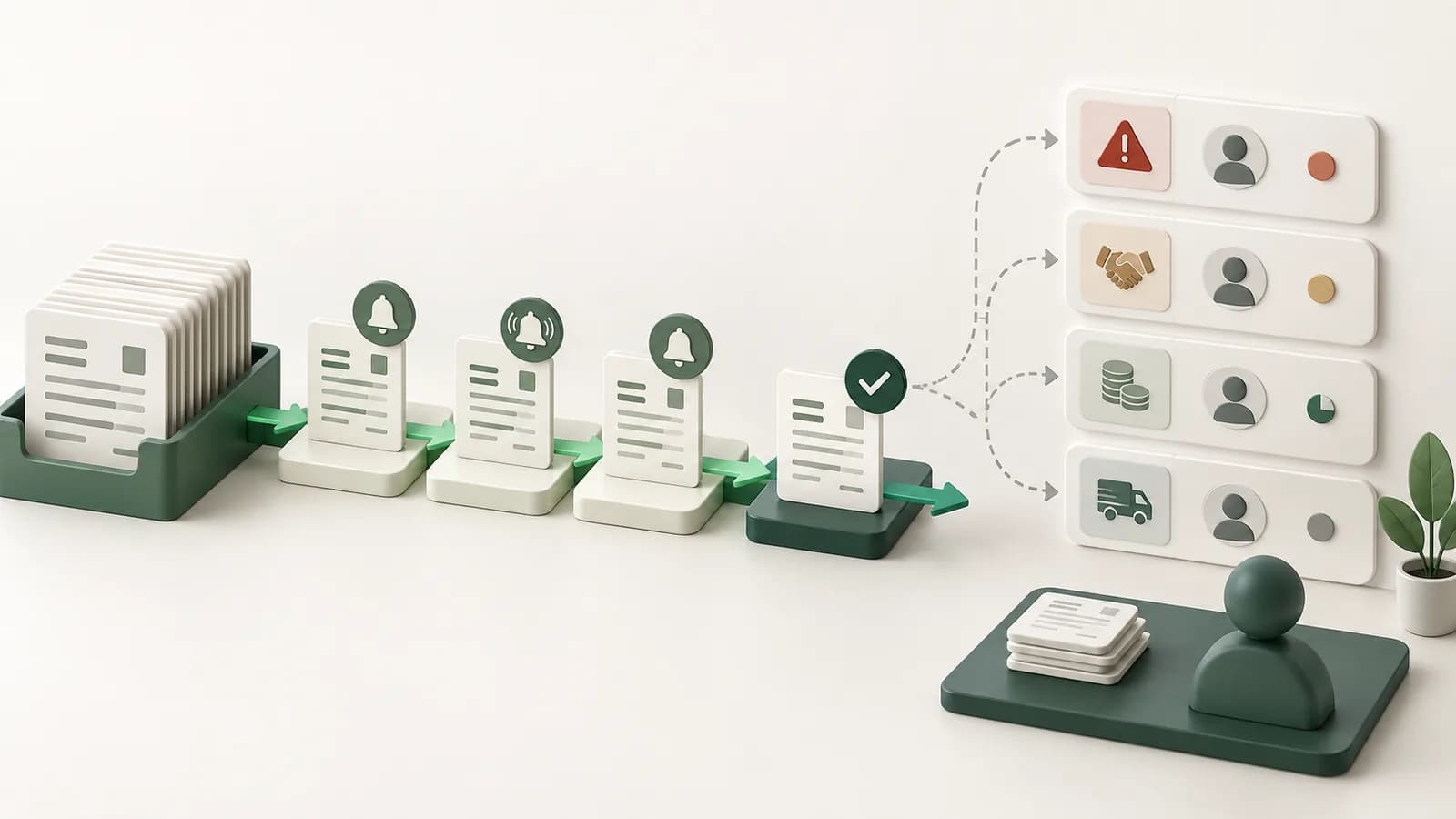
Finance teams often try to reduce billing follow-up by scheduling more messages. That can lower manual effort on straightforward overdue invoices, but it creates a different control problem when the invoice was never delivered, is disputed, has been partly paid or is covered by a credible promise to pay.
The better objective is to reduce avoidable touches while preserving the reason every open invoice remains open. Routine cases can move through a controlled cadence. Exceptions should leave that cadence, keep their evidence and go to one accountable owner.
This changes follow-up from a calendar activity into state-based work. The system proposes the next action from known facts; finance retains authority over exceptions, material exposure and policy.
Make invoice state reliable before automating
A reminder should never be the mechanism that discovers whether an invoice exists, was approved or reached the customer. Retain the issued version, destination, send result, due date, currency, open amount and customer account before collection activity begins.
Define observable states such as prepared, issued, delivered, due, overdue, disputed, promised, partially paid and paid. Avoid a single open label that makes very different cases look eligible for the same message.
Reconcile payment information frequently enough that a receipt does not trigger an embarrassing reminder. When allocation is uncertain, move the invoice to an unapplied-payment exception rather than declaring it paid or overdue.
Automate only the stable middle
A stable reminder case has a valid invoice, confirmed delivery path, known balance, no active dispute, no current promise and an appropriate customer contact. That population can receive a measured sequence based on due date and customer segment.
Set the sender, tone, timing and channel deliberately. Give the customer a direct route to the invoice, payment options and a way to raise a question. Preserve each attempt and response against the invoice.
Use stop conditions as carefully as send rules. Payment evidence, a dispute, failed delivery, a promise, a credit review or manual hold should pause the routine path until an owner resolves or reclassifies the case.
Build exception queues with one next action
Separate exceptions by the work required: delivery failure, missing reference, commercial dispute, tax or document correction, partial payment, unapplied cash, promise to pay and internal approval gap. Each queue needs an accountable role and service expectation.
Every item should show the reason, latest evidence, owner, next action and target date. Notes alone do not create control. A note describes what happened; a next action states who will do what by when and what outcome closes or changes the case.
Escalation should add authority or expertise. It should not copy more people into an email while leaving ownership ambiguous.
Treat promises and disputes as structured states
Record a promise with the customer contact, covered invoices, amount, currency, promised date and any conditions. Pause reminders only for the covered scope. On the promised date, look for receipt and allocation evidence before closing the item.
A dispute needs the customer's wording, affected lines or amount, internal resolver and next response date. Keep the undisputed balance visible according to policy rather than allowing the entire account to disappear from follow-up.
When a correction is required, preserve the issued invoice and link the approved credit, cancellation or replacement. Resume collection from the corrected balance and delivery state.
Give collectors a decision-ready workspace
A collector should not need to search email, chat, bank exports and the accounting ledger before every contact. Bring invoice identity, delivery evidence, contact history, open balance, related credits, payment activity and next action into the case view.
Prioritize with more than age. Consider value, reason, customer commitment, strategic risk and time since the last meaningful action. The goal is not to maximize message volume; it is to move the right cases toward resolution.
Templates can standardize tone and required information, but allow controlled personalization from the recorded context. Customers should not receive a generic demand when finance already knows the specific blocker.
Measure resolution, not reminder volume
Track the share of invoices entering exceptions, time to first owned action, time in each reason, promises kept, disputes resolved, delivery failures corrected and cash left unapplied. These measures expose upstream causes that another reminder cannot fix.
Review manual touches per invoice and the percentage of routine reminders stopped correctly. A falling touch count is useful only if wrong contacts, duplicate reminders, aged disputes and unapplied receipts do not rise.
Use results from your own population rather than presenting internal performance as an industry benchmark. Segment by customer and billing flow so one unusual account does not distort the operating picture.
Introduce automation in controlled stages
Begin with a narrow customer segment whose contact, delivery and payment data is reliable. Run the proposed cadence in preview, inspect which invoices would enter or leave it, and obtain approval for message templates and stop rules.
During the first live cycle, review sent messages and suppressed cases daily. Sample paid, disputed and promised invoices specifically; these are the states where stale data produces the most visible errors.
Expand only after the team can explain every incorrect inclusion or exclusion. Keep a rollback route for message rules and preserve the state history when changing cadence. Automation should become broader as evidence improves, not simply because the calendar advances.
A representative operating scenario
Suppose finance manages 600 open invoices. Four hundred are valid, delivered and undisputed; they can follow a customer-appropriate reminder ladder. The remaining 200 include failed delivery, purchase-order gaps, active disputes, partial payments and promises. Sending the same email to all 600 would create activity but destroy useful context.
Instead, routine reminders operate on the stable 400. The other cases enter reason-specific queues. A promised invoice is checked on its commitment date, a delivery failure returns to customer-data ownership, and a partial payment moves to allocation review. Finance touches fewer records because each touch advances a decision.
Five-point case review
Is the issued invoice, destination, due date and current open amount reliable?
Do send rules and stop conditions reflect dispute, promise and payment states?
Does every exception have one reason, owner, next action and target date?
Can collectors see the evidence needed for a useful customer conversation?
Are resolution time, incorrect reminders and manual touches improving together?
Put the decision into practice
Start with the last thirty days of overdue invoices. Classify each by delivery state, balance, dispute, promise, owner and next action. Automate only the cases that meet the stable criteria and place the rest into named queues with stop conditions.
After one billing cycle, compare manual touches, incorrect reminders, unresolved exceptions and time to meaningful action. Keep the automation that reduces work without reducing evidence or accountability; redesign the rules that merely make activity faster.
Make a monthly control review part of the operating rhythm. Sample messages that were sent, cases that were suppressed and exceptions that exceeded their target date. Confirm that customer responses changed the recorded state and that payments stopped further contact. Feed recurring causes back to sales, delivery, customer-data and accounting owners. The durable saving comes from removing the reason for follow-up, not only automating the contact.
Publish the agreed state definitions and queue ownership where every contributor can use them. Train new team members against real anonymized cases, and require an accountable reviewer to approve material changes to reminder timing, message content or exception logic before those changes reach customers.
Evidence
Sources and scope
- Invoicera payment reminders
Provides product context for automated payment reminders. Teams should set cadence, stop conditions and escalation rules according to their customers and policies.
Continue in context